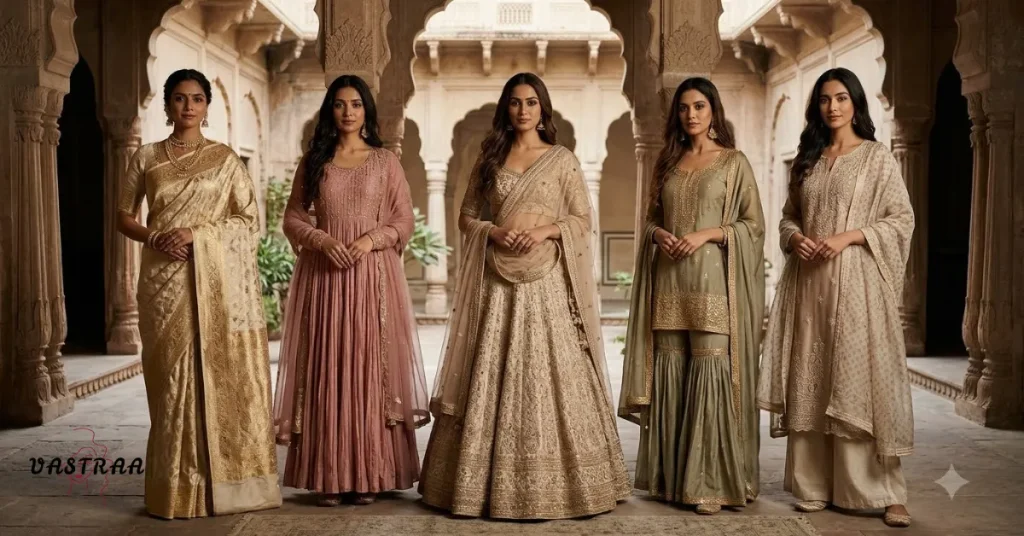
Indian ethnic wear is a beautiful reflection of the country’s rich cultural heritage, traditional craftsmanship and evolving fashion trends. From graceful sarees and elegant Anarkali suits to stylish shararas and beautifully embroidered lehengas, Indian traditional clothing offers a wide variety of choices for women. Every outfit has its own identity, design, fabric, silhouette and cultural significance.
However, with so many styles available, identifying different types of Indian ethnic wear can sometimes be confusing. Understanding their unique features can help women make better fashion choices for weddings, festivals, family gatherings and everyday occasions.
In this guide, we will explore the most popular types of Indian ethnic wear for women and learn how to identify each style.
1. Sarees – The Timeless Symbol of Indian Tradition
The saree is one of the most iconic traditional outfits in Indian fashion. It is a long piece of unstitched fabric, generally ranging from five to nine yards, draped elegantly around the body and paired with a blouse.
How to identify a saree:
- It consists of a long fabric with a decorative border and pallu.
- It is traditionally worn with a fitted blouse and an underskirt.
- Different draping styles create different regional looks.
- It is available in fabrics such as silk, cotton, chiffon, georgette and organza.
Popular varieties include Banarasi silk sarees, Kanjivaram sarees, Chanderi sarees, Bandhani sarees and chiffon sarees. Each variety has distinctive patterns, weaving techniques and regional influences.
Sarees are suitable for weddings, festivals, religious ceremonies and formal celebrations.
2. Salwar Kameez – A Comfortable Traditional Outfit
The salwar kameez is one of the most versatile Indian outfits. It consists of a tunic called a kameez, loose or fitted trousers called salwar and a dupatta.
How to identify a salwar kameez:
- A long or medium-length tunic forms the upper part.
- The bottom generally features loose or fitted trousers.
- A dupatta is commonly included to complete the outfit.
- It comes in different fabrics, prints, embroidery styles and silhouettes.
Popular variations include straight-cut suits, Patiala suits, Punjabi suits and Pakistani-style suits.
Salwar kameez outfits are commonly worn for everyday activities, office wear, festivals and family functions because they offer a combination of comfort and traditional elegance.
3. Anarkali Suits – Graceful and Flared Ethnic Wear
Anarkali suits are known for their flowing, flared silhouettes. Inspired by traditional Mughal-era fashion, these outfits feature a fitted upper section that gradually expands into a wide, flared lower portion.
How to identify an Anarkali suit:
- It has a fitted bodice and a flared silhouette.
- The outfit generally features a long, flowing kurta.
- It is often decorated with embroidery, zari work, sequins or embellishments.
- It is usually paired with churidar trousers and a dupatta.
Anarkali suits are particularly popular for weddings, festive celebrations, engagement ceremonies and formal occasions.
4. Lehenga Choli – A Popular Wedding and Festive Outfit
Lehenga choli is a traditional Indian outfit consisting of three main components: a flared skirt called a lehenga, a fitted blouse called a choli and a dupatta.
How to identify a lehenga choli:
- It features a long, flared or panelled skirt.
- The blouse is usually fitted and may have different sleeve and neckline designs.
- A dupatta is draped over the shoulder or head.
- Heavy embroidery, zari, mirror work and decorative patterns are common.
Lehengas are available in silk, velvet, georgette, net and other fabrics. Bridal lehengas often feature elaborate embroidery, while lighter designs are suitable for festive gatherings and family celebrations.
5. Sharara Suits – Traditional Fashion with a Flared Bottom
Sharara suits are recognised by their distinctive wide-legged trousers that flare dramatically from the knee or thigh area. They are generally paired with a short or medium-length kurta and a dupatta.
How to identify a sharara suit:
- The trousers have a wide, dramatic flare.
- The upper portion is generally fitted around the waist and hips.
- The outfit often includes decorative borders and embroidery.
- It is commonly styled with embellished footwear and traditional jewellery.
Sharara suits are popular choices for mehendi functions, sangeet ceremonies, festive occasions and wedding celebrations.
6. Gharara Suits – A Distinctive Traditional Style
Although ghararas and shararas may look similar, they have different construction styles. Ghararas feature fitted trousers around the thighs, with a noticeable flare beginning around the knee. They often include a decorative band or joint where the flare begins.
How to identify a gharara suit:
- The trousers are fitted around the upper legs.
- A prominent flare begins near the knees.
- Decorative embroidery is often placed around the knee joint and trouser borders.
- The outfit is generally paired with a short kurta and dupatta.
Gharara suits are especially popular for traditional celebrations, weddings and festive gatherings.
7. Kurti and Kurta Sets – Everyday Ethnic Fashion
Kurtis and kurtas are among the most practical and widely worn categories of Indian ethnic clothing. They are available in different lengths, patterns, necklines and silhouettes.
How to identify kurti and kurta sets:
- They feature a tunic-style upper garment.
- They can be paired with leggings, palazzos, straight pants, jeans or skirts.
- They are available in cotton, rayon, silk, linen and other fabrics.
- Their designs range from simple everyday prints to elaborate festive embroidery.
Kurtis are particularly suitable for college, office, casual outings and everyday wear. They can also be styled with traditional jewellery and footwear for a more festive appearance.
8. Palazzo Suits – Comfort Meets Traditional Elegance
Palazzo suits combine a traditional kurta with wide-legged trousers known as palazzos. They offer a relaxed silhouette while maintaining an elegant ethnic appearance.
How to identify palazzo suits:
- The trousers are wide-legged and flow freely.
- They are usually paired with a straight-cut or A-line kurta.
- A dupatta may be included depending on the design.
- They are available in printed, embroidered and solid-colour variations.
Palazzo suits are suitable for casual gatherings, office wear, festive occasions and everyday styling.
9. Indo-Western Wear – A Blend of Two Fashion Cultures
Indo-Western fashion combines traditional Indian clothing elements with contemporary Western silhouettes. It is a popular choice for women who enjoy experimenting with modern and traditional styles.
How to identify Indo-Western outfits:
- They combine Indian embroidery, prints or fabrics with modern cuts.
- Traditional kurtas may be paired with jeans or contemporary trousers.
- Ethnic skirts can be styled with modern crop tops.
- Jackets, capes and fusion dresses are common design elements.
Indo-Western outfits are suitable for parties, festive gatherings, college events and contemporary celebrations.
10. Choosing the Right Ethnic Wear for Different Occasions
Understanding different ethnic wear styles makes it easier to select outfits according to the occasion.
Here are some useful suggestions:
- Weddings: Lehengas, heavily embroidered sarees, Anarkali suits and ghararas.
- Festivals: Kurta sets, sharara suits, printed sarees and lightweight lehengas.
- Office wear: Cotton kurtis, straight-cut suits and simple palazzo sets.
- Casual outings: Printed kurtis, comfortable salwar suits and Indo-Western combinations.
- Family gatherings: Elegant sarees, embroidered Anarkalis and stylish sharara sets.
When selecting an outfit, consider the occasion, fabric, weather, comfort and overall design.
Conclusion
Indian ethnic wear offers endless possibilities for women who appreciate traditional fashion and cultural craftsmanship. From the timeless beauty of sarees to the graceful silhouettes of Anarkalis, lehengas, shararas and kurtis, every outfit has its own distinctive charm.
Understanding the different types of ethnic wear makes it easier to recognise their unique characteristics and choose suitable outfits for different occasions.
At VASTRAA, we celebrate the beauty of women’s fashion by bringing traditional elegance and contemporary styling together. Whether you prefer classic ethnic outfits or modern Indo-Western combinations, discovering different styles is the first step towards creating a wardrobe that reflects your personal fashion preferences.